Asphalt Maintenance
Crack Filling for Driveways & Parking Lots
Stop water intrusion and pavement deterioration with professional asphalt crack filling. Nexus Asphalt Paving & Sealcoat provides crack filling for driveways and parking lots throughout Auburn Hills and Oakland County, Michigan.
Why Crack Filling Matters
Protect Your Asphalt Before Small Cracks Turn Into Expensive Repairs
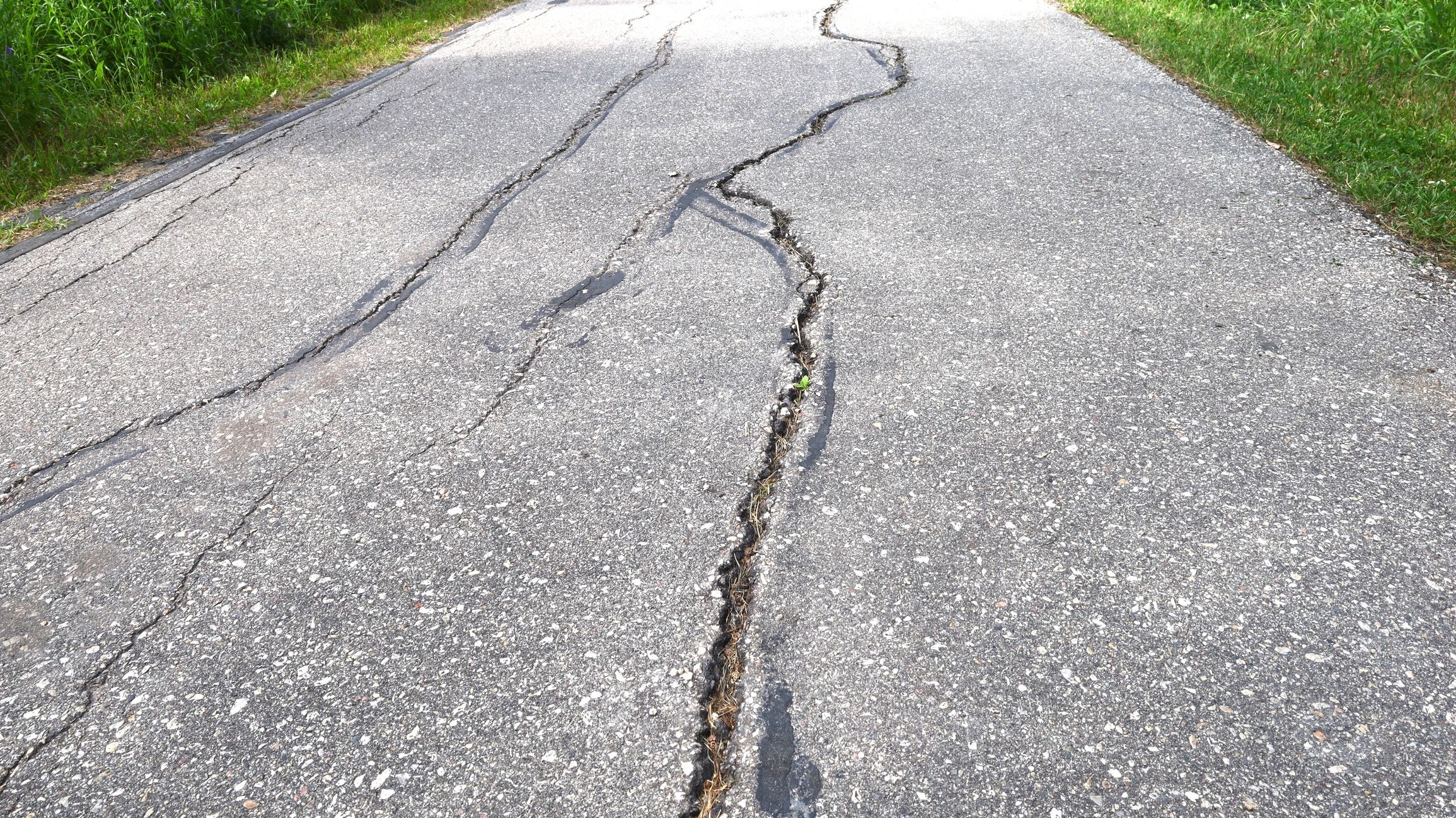
Cracks let water into the base, leading to potholes, heaving, and premature failure. Crack filling is a cost-effective way to extend the life of asphalt surfaces and improve appearance.
Keeps Water Out
We seal openings to reduce moisture infiltration that weakens the base and subgrade.
Slows Crack Growth
Routing and sealing helps limit spreading and raveling from traffic and freeze/thaw cycles.
Improves Curb Appeal
Clean, sealed cracks make driveways and lots look maintained and professional.
Pairs Well With Sealcoating
Crack filling is often the first step before sealcoating for better protection and a smoother finish.
Our Crack Filling Process
1) Evaluate & Prep
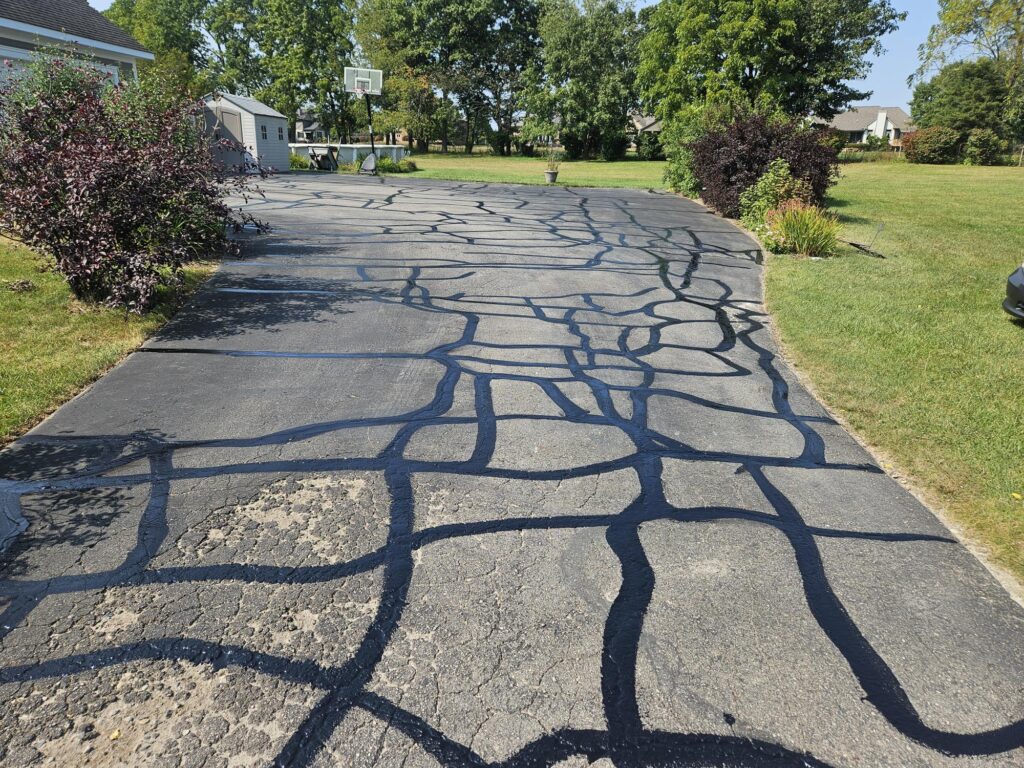
We inspect crack type and severity, remove debris/vegetation, and clean for strong adhesion.
2) Route (When Needed)
For certain cracks, routing creates a clean reservoir so sealant bonds and performs longer.
3) Fill & Seal
We apply hot rubber asphalt crack filler and finish for a neat, durable seal.
Crack Filling for Residential & Commercial Properties
From single-lane driveways to high-traffic parking lots, we tailor crack filling to your surface condition and usage.
Driveways
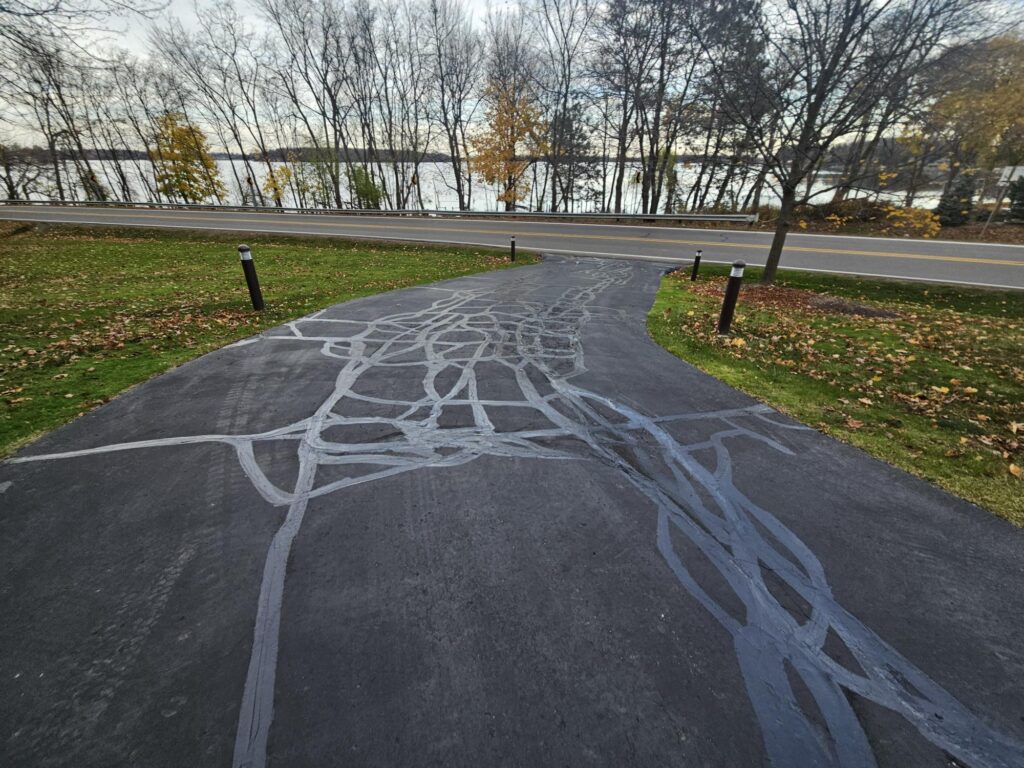
Reduce water damage and keep your driveway looking clean between major resurfacing cycles.
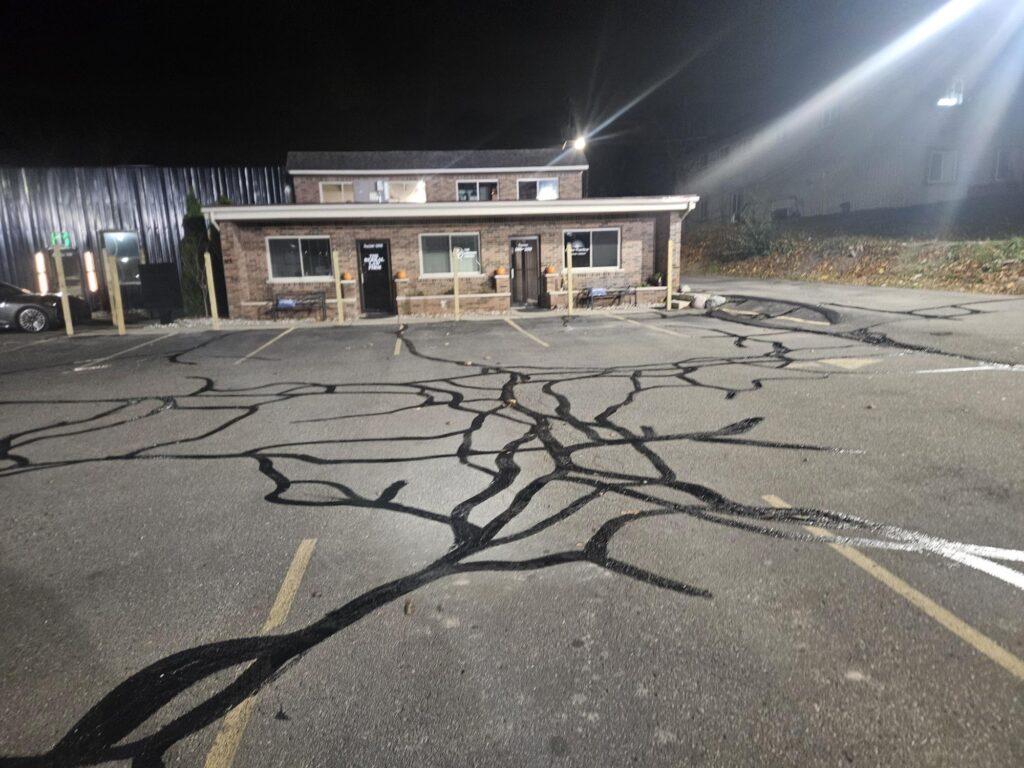
Parking Lots
Improve safety and appearance while protecting your investment and reducing liability risks.
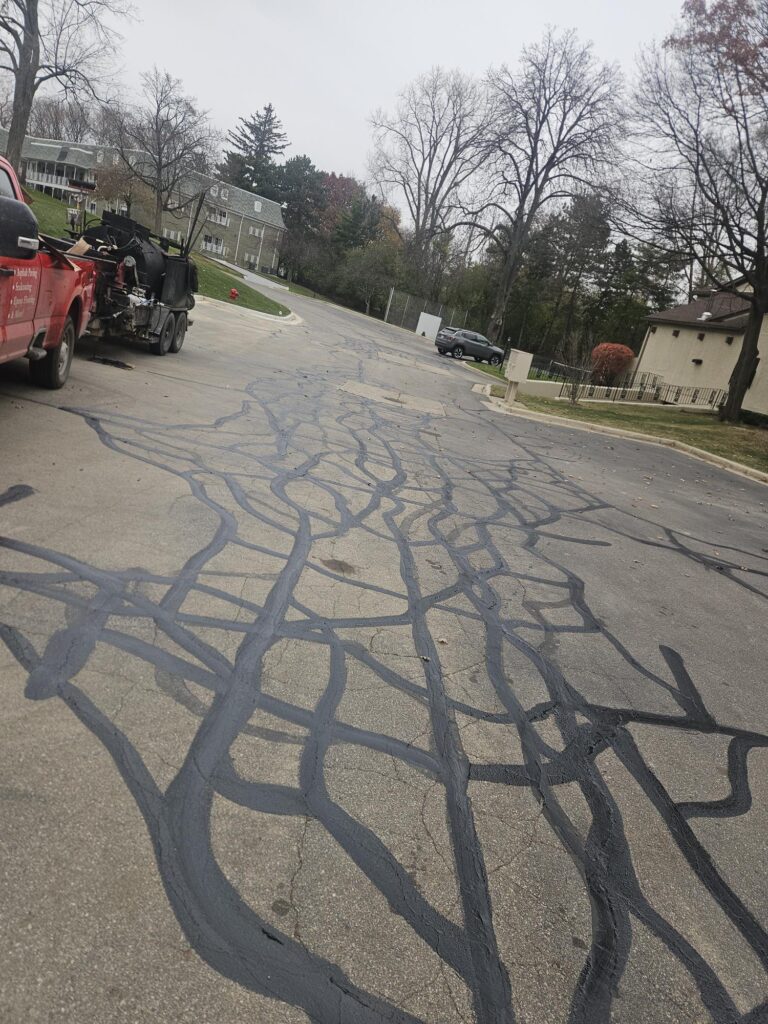
Private Roads
Maintain smoother travel surfaces and slow deterioration from drainage and weather exposure.
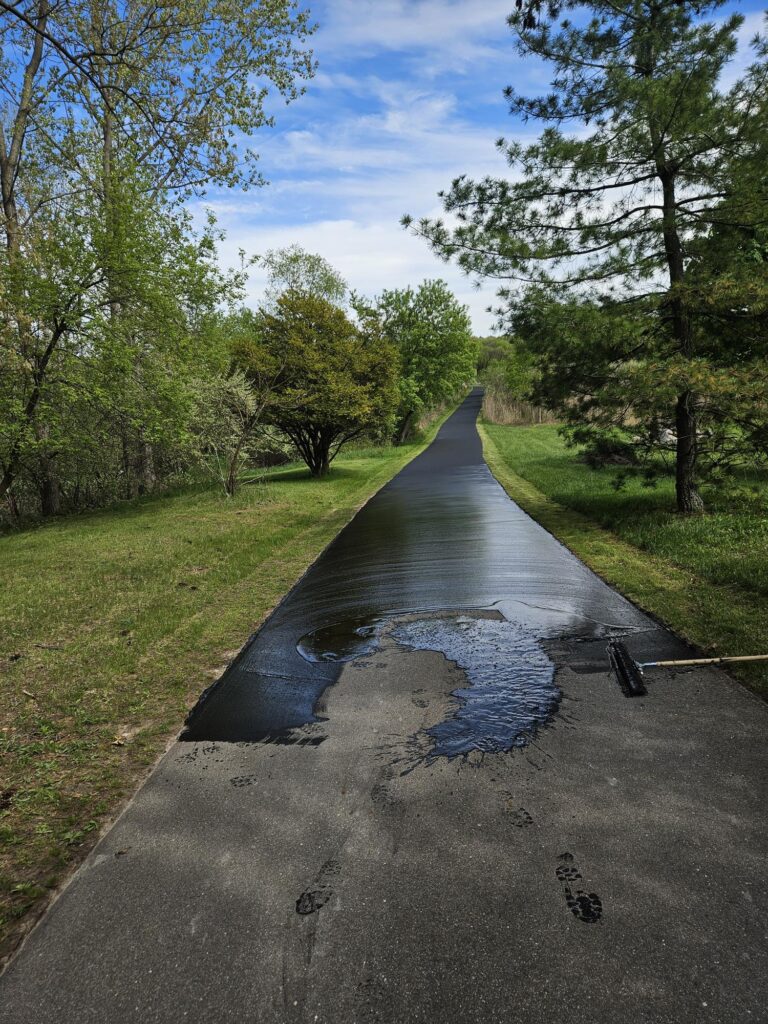
Preventive Maintenance Plans
Combine crack filling with sealcoating and repairs for a long-term maintenance strategy.
Crack Filling FAQs
Quick answers to common questions about crack filling for asphalt driveways and parking lots.
What’s the difference between crack filling and crack sealing?
Crack filling is typically used for non-working cracks and focuses on filling voids. Crack sealing uses more flexible materials and techniques for cracks that expand and contract with temperature changes.
When is the best time to fill cracks?
Dry conditions are best. In Michigan, spring through fall is ideal, but we can recommend timing based on your pavement condition and schedule.
Should I fill cracks before sealcoating?
Yes—crack filling is commonly done first so the sealcoat can protect the surface more effectively and look more uniform.
How long does crack filler take to cure?
Cure times vary by material and weather. Many areas can be reopened the same day, but we’ll provide a clear timeline for your site.
Will crack filling fix all asphalt problems?
Crack filling helps prevent water intrusion and slows deterioration, but potholes, base failures, and severe alligator cracking may require patching or replacement.
Do you service commercial properties and HOAs?
Yes. We work with homeowners, property managers, HOAs, and municipalities often. Our team provides residential driveway crack filling and commercial parking lot & roadway crack sealing throughout Auburn Hills and Oakland County.
Ready to Seal the Cracks Before They Spread?
Call (248) 872-9461 or request a quote online. Serving Auburn Hills, Oakland County, and surrounding areas.